Why Is My Colorado Concrete Cracking and Heaving? The Expansive Clay Soil Problem, Explained
Your house has a solid foundation. No cracks in the walls, no doors sticking, no sloping floors. And yet the driveway out front has a crack running corner to corner, the patio slab is tilting back toward the house, and the front walk has a lip you catch your toe on every October. If that sounds familiar, you're looking at Colorado's single most common concrete complaint — and it has almost nothing to do with how the concrete was poured.
The Pierre Shale Story
Underneath much of the Front Range — Denver metro, Colorado Springs, and Pueblo — sits a formation called Pierre Shale, a marine clay-shale laid down in the Late Cretaceous period, roughly 70 to 100 million years ago, when an inland sea covered the region. Pierre Shale is made mostly of illite and smectite clay mixed with quartz, but the detail that matters for your driveway is what happened during its formation: episodic volcanic ash falls settled into the ancient seabed and, over time, altered into nearly pure layers of smectite, commonly known in Colorado as bentonite.
The clay mineral responsible for all the trouble is montmorillonite — the technical name for what most Front Range homeowners and contractors just call bentonite. Pure montmorillonite can theoretically swell to as much as 15 times its dry volume when it absorbs water. Real Front Range soil is never pure montmorillonite, so actual swelling typically runs closer to 1.5 times dry volume — but even at that diluted rate, it's more than enough to crack a driveway, heave a patio, and buckle a sidewalk. This isn't a fringe theory or an old wives' tale about Denver soil; it's a documented geologic hazard tracked by the Colorado Geological Survey and studied in peer-reviewed research on expansive clay damage to Front Range subdivisions built on Pierre Shale.
The Swell-Shrink Mechanism
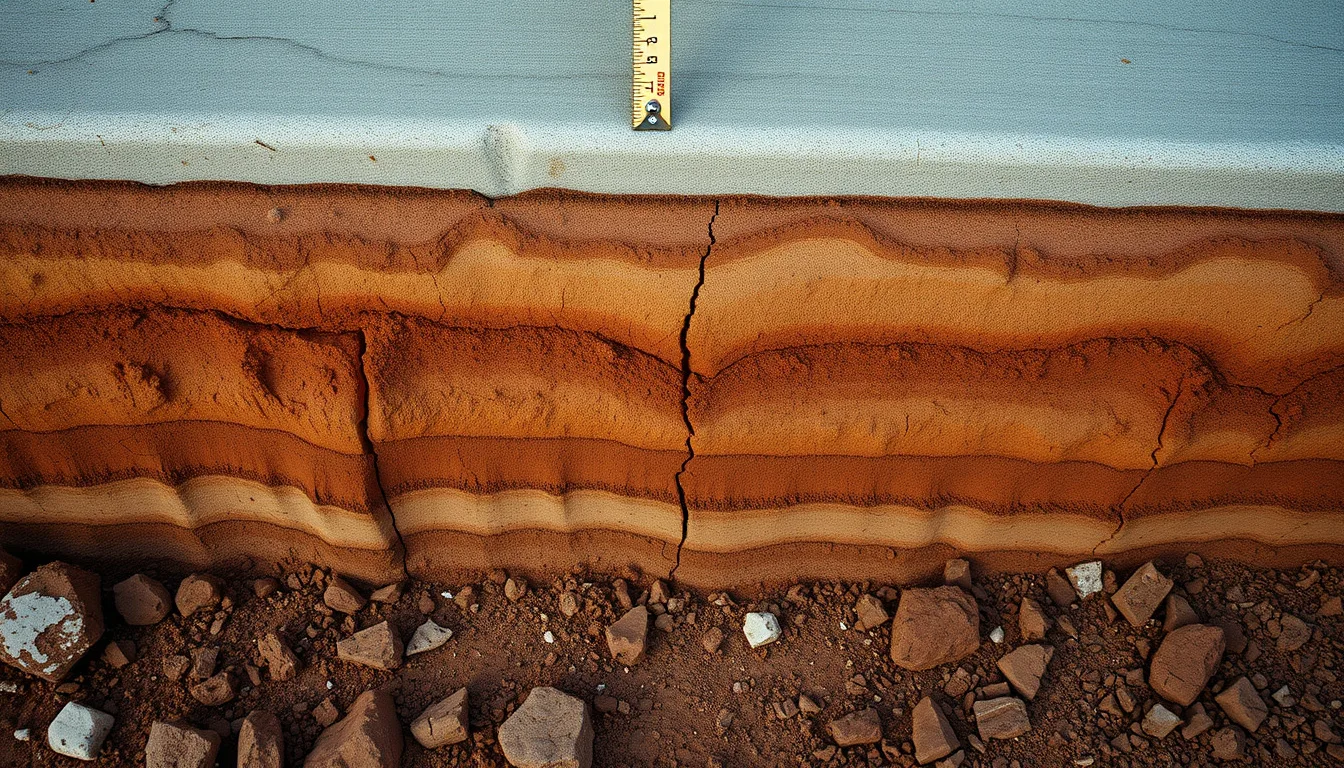
Bentonite-bearing clay and weathered claystone behave like a sponge with a long memory. When moisture reaches it — spring snowmelt, a wet summer, a sprinkler head running too close to the slab — the clay absorbs water and swells, pushing upward and outward against anything sitting on top of it. When the soil dries out later in the season, the same clay shrinks back down, leaving a gap where it used to press firmly against the underside of a slab.
That's not a one-time event. It's a seasonal cycle, and on the Front Range it's a big one: documented ground movement in affected areas runs roughly 2 to 6 inches over the course of a wet-to-dry swing. Six inches of vertical movement under a driveway or patio is more than enough to crack a slab, tilt it, or lift one edge while the other stays put — and because the cycle repeats every year, a slab that cracked once from clay movement is likely to keep moving unless something changes.
Why Your Foundation Is Fine but Your Driveway Isn't
This is the part that confuses most homeowners, and it's the single best explanation for almost every "why is my concrete cracking" call we get: your house and your driveway are not built the same way.
Denver-area homebuilders have long dealt with expansive clay by using drilled pier foundations — deep concrete piers that punch through the unstable clay layer entirely and anchor into stable bedrock below it. Once a house foundation is sitting on piers reaching bedrock, the swelling and shrinking clay around those piers mostly doesn't matter; the house isn't resting on the clay, it's resting on rock far beneath it.
Your driveway, your patio, your front walk, and your garage slab are a different story. Exterior flatwork is essentially never built on piers — it's poured directly on grade, sitting right on top of the same expansive clay that your house foundation was specifically engineered to bypass. So the house holds still while everything around it moves with the seasons. That mismatch, not poor workmanship, is why a home with an "engineered," problem-free foundation can still have a driveway that cracks and heaves year after year.
Diagnosis Checklist: Is It Soil, Freeze-Thaw, or Salt?
Colorado concrete fails for three different reasons, and they don't all look the same. Use these patterns to get a read on what's driving your damage before you call anyone:
- Slab edges higher in some seasons, lower in others, or a slab that visibly tilts and re-levels itself somewhat year to year — classic expansive clay movement
- A single long crack running corner-to-corner or along a straight line, especially near a downspout or sprinkler zone — usually clay-driven, concentrated where extra moisture reaches the soil
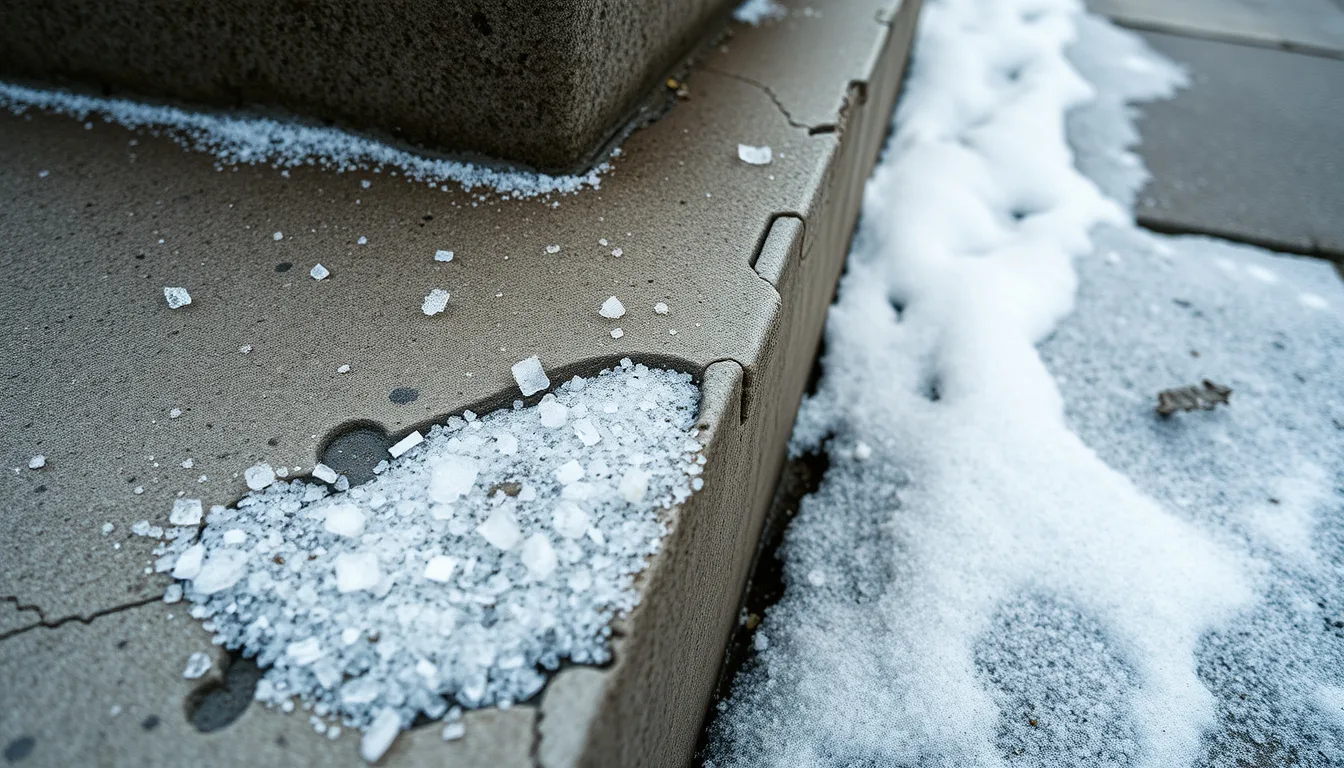
- Flaking, pitting, or a rough, crumbly surface texture without much movement — points toward freeze-thaw and de-icing salt damage, not soil movement
- A crack that's widened noticeably every winter but was originally hairline — often freeze-thaw working on top of an initial soil-movement crack; the two causes frequently compound each other
- Movement concentrated at a patio or garage apron close to the foundation — expansive clay is especially active right where flatwork meets backfill against the stem wall
Most real Colorado repair jobs are a combination of causes, not a single one — but knowing which one is leading tells a contractor which repair material and method will actually hold.
What Actually Helps: Controlling Water
Expansive clay only swells when it gets wet, which means the single most effective thing a homeowner can do between repairs is control how much water reaches the soil under and around a slab:
- Redirect downspouts away from the foundation and driveway edge instead of letting them discharge straight into the soil next to the slab
- Check sprinkler and drip irrigation zones near driveways, walks, and patios — daily overspray right at a slab edge feeds the swelling cycle in slow motion
- Grade away from the house and hardscape so surface water sheets off instead of pooling against a slab
- Fill and seal existing cracks so rainwater and snowmelt can't funnel directly down into the clay through the crack itself
None of that stops the clay from being expansive. What it does is reduce how dramatically the soil swings between wet and dry, which slows the rate of movement and gives any concrete repair a real chance to hold.
When Heave Signals a Bigger Problem
Most cracked and heaved flatwork is a cosmetic and structural nuisance, not an emergency — but a few signs mean the situation deserves a broader evaluation before anyone starts patching concrete:
- Interior foundation cracks, sticking doors, or sloping floors appearing alongside the exterior heave, which suggests the house foundation itself may be affected
- Movement of several inches in a single season rather than a gradual multi-year trend
- Utility lines, gas meters, or structural elements visibly shifting along with the slab
If any of those apply, the right first call is a geotechnical or structural evaluation, not a concrete crew. For everything short of that, the flatwork itself is very treatable.
Matching the Repair to the Symptom
Once you know clay movement is the driver, the repair choice follows naturally:
- Active, moving cracks call for flexible polyurethane sealant rather than rigid epoxy, since a rigid fill can simply crack again next to soil that's still cycling
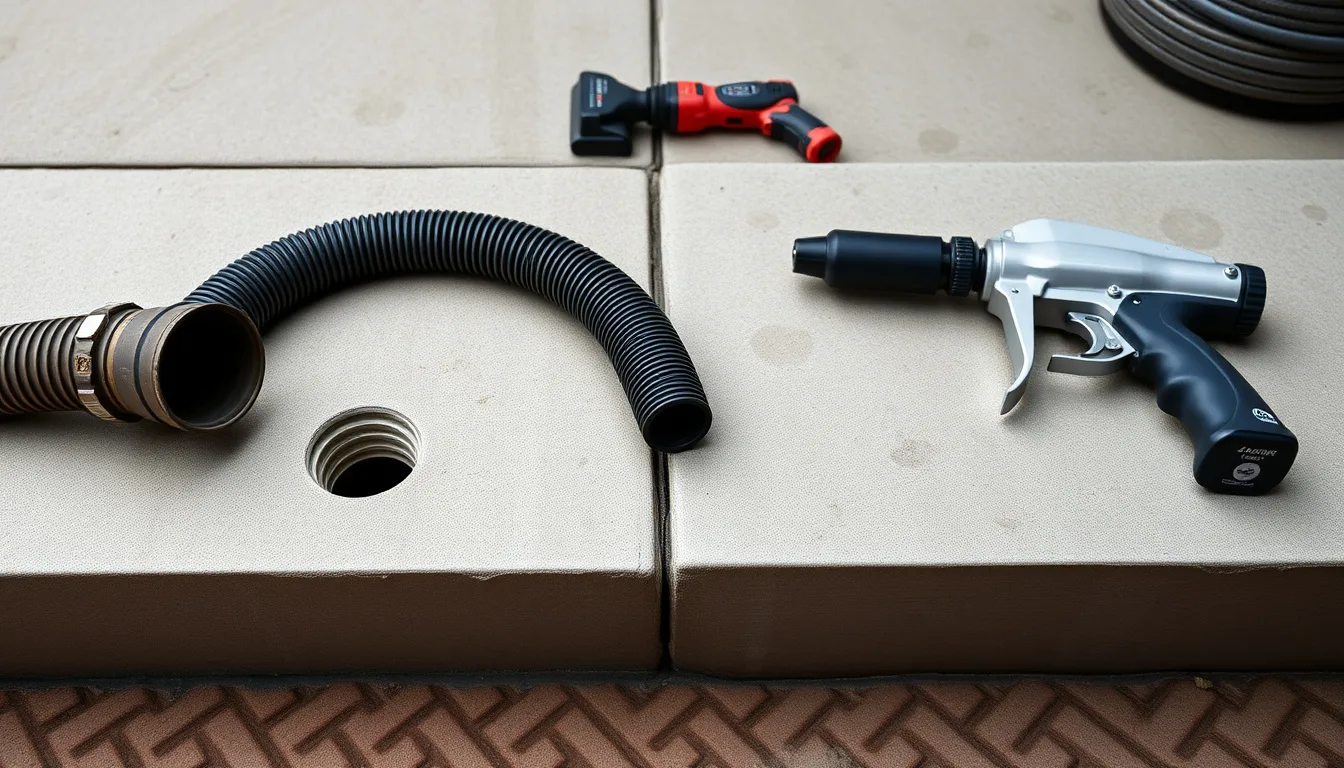
- Heaved or sunken slab sections are a candidate for lifting and leveling — polyurethane foam is usually the better choice over expansive clay specifically because it's lightweight and doesn't add new load to soil that's already unstable
- Surface-level cracking without much movement can often be resurfaced once any active cracks underneath are addressed first
Get an Honest Read on What's Under Your Slab
A cracked or heaving driveway on the Front Range is rarely a mystery once someone actually looks at it — it's usually the same Pierre Shale and bentonite clay story playing out on thousands of properties from Denver to Colorado Springs to Pueblo. We inspect for free anywhere in Colorado, tell you honestly whether soil movement, freeze-thaw, or salt damage is driving what you're seeing, and recommend the repair that actually matches the cause.
Get in touch through our contact form for a free inspection and a straight answer about what's moving under your concrete.
Ready for a real number?
Free inspections statewide — measured on site, fixed price before any drilling starts.