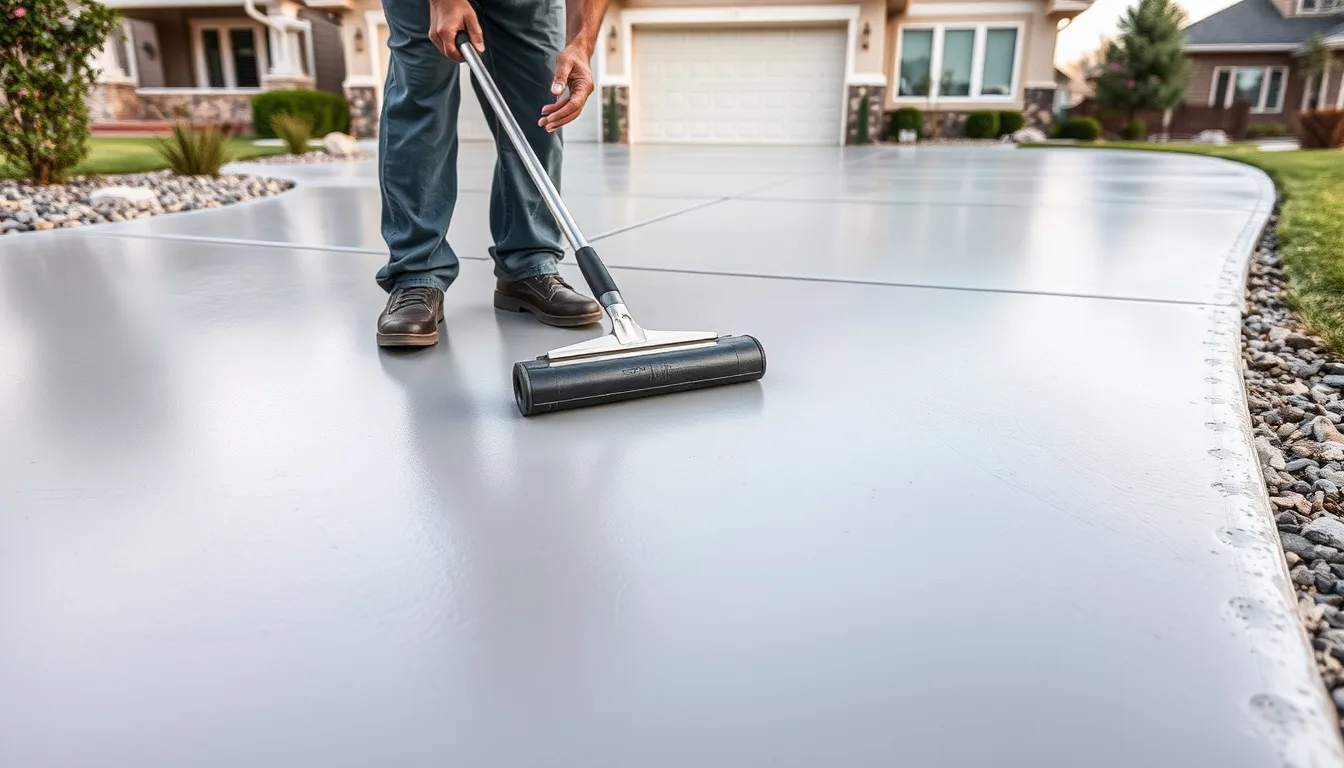
Resurfacing & Overlay — Statewide Colorado
Concrete Resurfacing & Overlay in Colorado — Restore Winter-Damaged Concrete Without a Full Tear-Out
Years of freeze-thaw cycling and de-icing salt leave Front Range concrete pitted and worn even when the slab underneath is still solid. A bonded overlay restores it for a fraction of replacement cost.
When Resurfacing Beats Both Patch Repair and Full Replacement
Resurfacing is the right call when the damage is at the surface — scaling, pitting, minor spalling, or a network of hairline cracks that have already been sealed — and the slab underneath is still structurally sound. If the concrete rings solid when you tap it and isn't broken into multiple separate pieces, it's very likely a resurfacing candidate rather than a replacement job.
Spot patching makes sense for a single isolated area of damage, but once scaling or shallow spalling is spread across most of a driveway, patio, or walkway, patching piece by piece starts to cost more than resurfacing the whole surface at once — and leaves a visibly patchy result. Full replacement, by contrast, is the right call when a slab has settled or heaved unevenly, broken into large separate sections, or has spalling deep enough to have compromised the reinforcing steel across a wide area. Resurfacing sits in the middle: it fixes surface-level winter damage on a slab whose structural base is still doing its job.
Resurfacing also has a real cost advantage over replacement. Because it keeps the existing slab, foundation prep, and grading in place, it typically costs a fraction of tearing out and repouring the same area — and it preserves any existing decorative finish, stamped pattern, or exposed-aggregate texture that a fresh gray pour simply can't match. We'll always tell you honestly when a slab has moved past the point resurfacing can fix, rather than overlaying a surface that's going to fail again within a season.
How Overlay Prep Works
A resurfacing overlay is only as good as the surface it's bonded to, so prep is most of the job. We start by cleaning and profiling the existing concrete — pressure-washing, then mechanically abrading or acid-etching the surface so the new material has something to grip rather than sitting on top of a slick, worn skin.
Any active cracks or voids in the base slab get addressed before the overlay goes down, not after — an overlay poured over an unsealed active crack will just telegraph that crack straight through the new surface within a season or two. A bonding agent is then applied to lock the new polymer-modified overlay material to the old concrete, and the overlay is screeded, floated, and finished to the chosen texture. Skipping any of these steps is the single most common reason a cheap overlay job delaminates within a year or two, so we treat prep as the part of the job worth doing right rather than the part worth rushing.
Standard vs. Decorative and Stamped Overlay Options
A standard single-color overlay restores a clean, uniform, broom-finished or trowel-finished surface — the most cost-effective option and a strong match for driveways, garage floor extensions, and utility walkways where function matters more than appearance.
Decorative and stamped overlays are a popular upgrade path for Front Range homeowners and HOA-driven subdivisions replacing worn driveways and patios: the overlay can be stamped with a pattern (stone, brick, slate) and colored or stained before sealing, giving an old slab the look of an upscale hardscape material without the cost or disruption of a full tear-out and replacement pour. Both options use the same bonded overlay process underneath — the difference is entirely in the finish work on top.
Sealing for What Next Winter Brings
An overlay that isn't sealed is just new concrete waiting to take the same freeze-thaw and de-icing-salt damage that wore out the original surface. Sealing the finished overlay closes the pore structure at the surface, meaningfully reducing how much salt-laden meltwater can penetrate and reducing the freeze-thaw expansion happening inside the material.
This is the real protect-your-investment step of a resurfacing job: a properly sealed, air-entrained overlay resists the next winter's roughly 149 freeze-thaw cycles far better than the unprotected original slab ever did, extending the useful life of the repair well beyond what the same overlay would achieve unsealed. On mountain-corridor properties above 5,000 feet, where intense high-altitude sun drives extra melt-refreeze cycling even in sub-freezing air, sealing matters even more than it does at the Front Range baseline.
Who Resurfacing Is Right For
Resurfacing is the most common right answer for Front Range homeowners whose driveway, patio, or walkway has taken five, ten, or twenty winters of freeze-thaw and de-icing-salt exposure and is showing it cosmetically without any structural movement — the classic case is a slab that still sits flat and sounds solid but looks chalky, pitted, or uneven in color. It's also a strong fit for HOA common areas and subdivision entries across Denver metro and Colorado Springs where a uniform, refreshed look matters for curb appeal as much as function.
It's the wrong fit for a slab that's actively heaving or settling from expansive clay movement underneath — resurfacing over an unstable base just means the same movement telegraphs through the new surface. In those cases we address the lifting or leveling first, then resurface once the slab is holding a stable grade.
What Resurfacing Costs by Finish Level
A basic single-color resurfacing typically runs about $3 to $5 per square foot. Where the existing damage is more extensive — deeper pitting, more crack repair needed before the overlay goes down — cost can run up toward $9 per square foot. Decorative or stamped overlays, which add pattern work, coloring, and additional finishing time, typically run $7 to $20 per square foot depending on the complexity of the finish chosen. Even at the higher end of that range, a decorative overlay routinely costs less than a comparable stamped-and-colored replacement pour.
We quote an exact price after inspecting the existing surface and confirming the base slab is a resurfacing candidate rather than a replacement job — square footage alone doesn't determine price, the amount of prep the existing concrete needs does.
Durability Expectations and Resealing Schedule
A properly installed, sealed overlay on a sound base slab typically holds up for many years of Colorado winters before it needs attention again, but sealing itself isn't permanent — foot and vehicle traffic, UV exposure, and repeated freeze-thaw and salt exposure gradually wear the sealer down well before the overlay itself needs replacing. A simple water-bead test — splashing a cup of water on the surface and watching whether it beads up or soaks in — tells you in seconds whether the sealer is still doing its job.
We recommend resealing on a multi-year schedule rather than a one-time application, checking the surface each spring for any thinning of the sealer's water-beading effect. Keeping the sealer current is a small, inexpensive step that does most of the work of protecting the larger overlay investment underneath it.
Get a Resurfacing Estimate
Send us photos of the damaged surface and your city, or book a free on-site inspection anywhere in Colorado. We'll confirm whether resurfacing is the right fit for your slab, walk you through standard versus decorative finish options, and give you a fixed price before any prep work starts. If the base slab turns out to need lifting or crack repair first, we'll say so plainly rather than overlaying a surface that isn't ready for it.
Get in touch through our contact form. If your slab also has active cracks or uneven sections, we address those as part of the same overlay job rather than sending you to a second crew.
We resurface statewide, with regular jobs across Denver, Aurora, Lakewood, Arvada, Westminster, Thornton, Centennial, Colorado Springs, Fort Collins, Boulder, and Pueblo.
Resurfacing & Overlay FAQs
Straight answers before we drill
A basic single-color resurfacing typically runs about $3–$5 per square foot, extensive-damage resurfacing up to roughly $9 per square foot, and decorative stamped or textured overlays about $7–$20 per square foot depending on finish complexity.
Not usually. Scaling is a surface-level problem — the top layer flaking away — and can typically be resurfaced or overlaid rather than replaced, as long as the base slab underneath is still structurally sound. Full replacement becomes necessary mainly when scaling has progressed to deep spalling with widespread exposed, corroded rebar.
A properly bonded overlay restores functional strength and a uniform, sealed surface, and can outlast the original unprotected concrete, especially when paired with sealing against future freeze-thaw and salt exposure. The goal isn't just cosmetic — it's stopping the damage cycle that wore out the original surface in the first place.
Sealing the overlay before winter, making sure any joints and cracks in the base slab are filled so water can't collect and freeze inside them, and using air-entrained material in the overlay itself all significantly reduce freeze-thaw damage. We build sealing into every resurfacing job so the fix doesn't just repeat the same failure next winter.
Sealing the finished overlay creates a barrier that reduces how much salt-laden water penetrates the surface, and switching to a less-corrosive de-icer such as calcium chloride or a sand-based traction aid on your own property meaningfully slows future scaling. We recommend a resealing schedule as part of protecting the overlay every winter going forward.
Cracked, sinking, or salt-damaged concrete? Get a fixed price before we drill.
Free inspections statewide. We diagnose freeze-thaw, de-icing salt, and expansive-soil causes before recommending a repair.