Spalling & Scaling Repair — Statewide Colorado
Concrete Spalling & Scaling Repair in Colorado — Fix Salt and Freeze-Thaw Damage Before It Reaches the Rebar
Flaking and pitted concrete isn't cosmetic — it's de-icing salt and freeze-thaw working toward your rebar. We stop it at the surface before it becomes a structural spall.
Scaling vs. Spalling: Two Stages of the Same Problem
Scaling is the surface layer of concrete flaking or peeling away, usually a thin skin at a time, exposing the rougher aggregate underneath. It often shows up first as a light, powdery pitting on a driveway or sidewalk after a hard winter and looks worse than it structurally is — at this stage the slab is still sound.
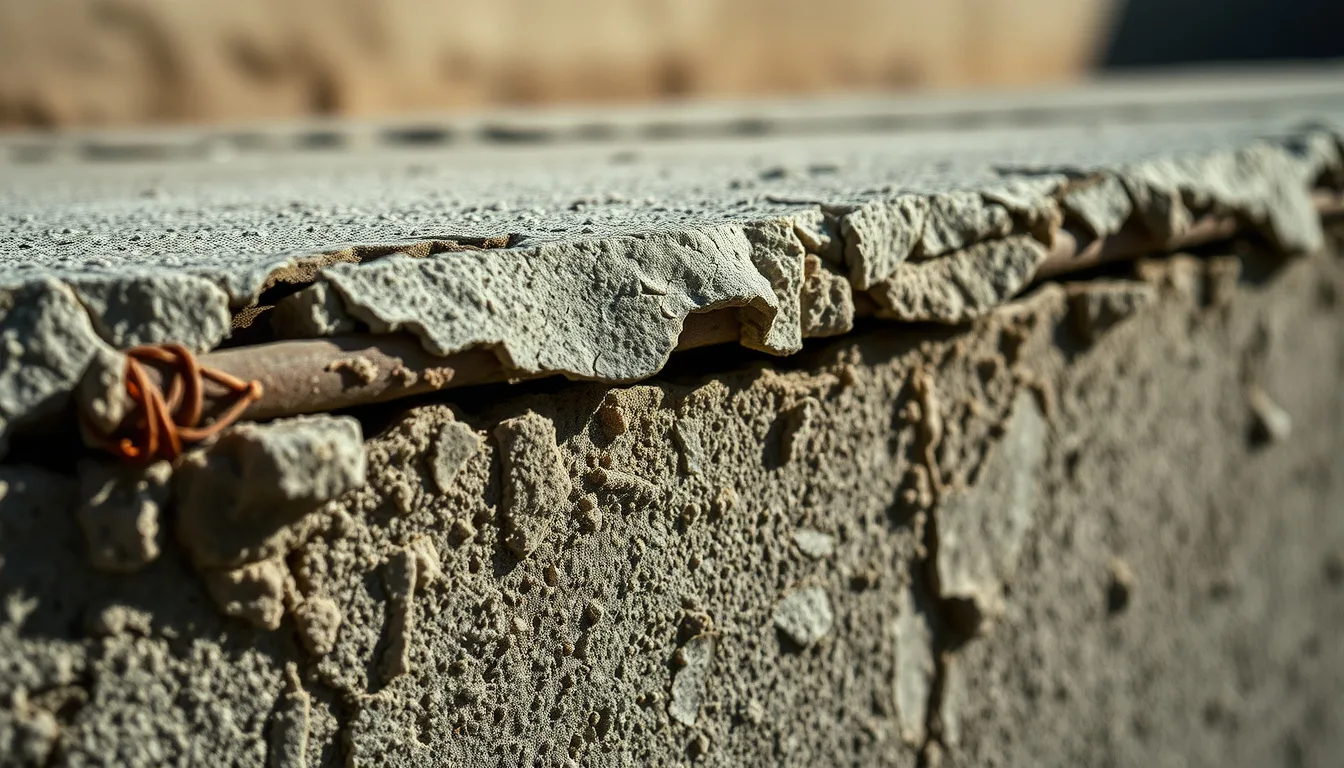
Spalling is the next stage: larger chunks of concrete breaking off, usually at edges, corners, or control joints, sometimes down to a depth of an inch or more. Where scaling is a surface problem, spalling means the damage has worked its way deeper into the slab — and on Colorado concrete, that depth is frequently where the rebar sits.
Left alone, scaling reliably becomes spalling. Both are stages of the same freeze-thaw and de-icing-salt damage progressing over time, which is why the repair scope — and the cost — grows the longer either is left unaddressed. A slab that's merely scaling today is a resurfacing job; the same slab a few winters later, once spalling has set in, is a patch-and-rebar job at meaningfully higher cost.
How Colorado's De-Icing Salt Actually Damages Concrete
Colorado DOT and Front Range municipalities rely on magnesium chloride and, less commonly, calcium chloride as the standard winter de-icers on roads, driveways, and sidewalks — different chemistry than plain rock salt used in many other states. Both increase the amount of water held inside the concrete's pore structure, which intensifies the freeze-thaw expansion and contraction happening inside the slab every winter and accelerates surface scaling.
The two chemicals are not equally damaging. Per American Concrete Institute durability testing, calcium chloride has a negligible long-term effect on concrete, while magnesium chloride causes measurable, ongoing surface deterioration — a 4% magnesium chloride solution produced a moderate scaling rating roughly double that of an equivalent calcium chloride solution in controlled testing.
This is a genuinely Colorado-specific damage story: driveways, sidewalks, and garage floors (via salt-laden tires and boots tracked indoors) all take this hit every winter, and it's the reason concrete here scales and pits in a way that milder, salt-free climates rarely see. Without air-entrained concrete engineered to give freezing water somewhere to expand into, unprotected slabs can begin scaling within just 2 to 5 years of exposure to this combination.
Mountain-corridor properties see an intensified version of the same mechanism. At elevations of roughly 5,000 to 10,000-plus feet, thinner air changes temperature faster and intense high-altitude sun can thaw ice even when the surrounding air stays below freezing, driving more melt-refreeze cycles than the Front Range baseline — which means salt-exposed concrete at altitude can scale faster than the same slab would in Denver.
Why Untreated Scaling Turns Into Structural Spalling
Chloride ions from de-icing salt don't stop at the surface — they eventually penetrate through to the embedded steel rebar and break down the passive oxide layer that normally protects it from corrosion. Magnesium chloride is reported to be more than twice as corrosive to stainless steel and up to ten times more corrosive to mild steel than calcium chloride.
Once rebar starts rusting, it expands, because rust physically occupies more volume than the original steel. That expansion cracks and blows out the surrounding concrete from the inside, which is how a driveway that was merely scaling two winters ago ends up with fist-sized chunks breaking off at a joint. Rust staining bleeding out of a crack or a hollow sound when you tap a section are both signs the damage has already reached the steel.
Repair Methods by Severity
Surface scaling on a structurally sound slab is typically fixed with a bonded resurfacing overlay — a thin, high-strength topping that restores a uniform, sealed surface without removing the existing concrete. Early-stage, isolated spalling is fixed with chip-out-and-patch repair: the damaged concrete is cut back to solid material and rebuilt with a polymer-modified patching compound bonded to the sound slab underneath.
Where spalling has exposed corroded rebar, the repair has to address the steel, not just the concrete around it — cleaning rust off the exposed bar, treating it with a corrosion inhibitor or protective coating, and in more severe cases splicing in new reinforcement before the patch is placed. Widespread spalling across a large section, or spalling that's undermined multiple joints, is usually the point where a bonded overlay across the whole surface is more cost-effective than patching each spot individually.
Preventing the Next Round of Damage
Repairing existing scaling or spalling without changing what caused it just restarts the clock. A penetrating sealer applied after repair meaningfully reduces how much salt-laden water gets into the concrete's pore structure, which is the mechanism behind both scaling and rebar corrosion. We build a sealing step into most spalling and scaling repairs for exactly this reason.
On your own property, switching from magnesium chloride to calcium chloride, or to a sand-based traction product, is a real, controllable step that's gentler on concrete going forward. Replacing badly damaged sections with air-entrained concrete — which is engineered with microscopic air pockets that give freezing water somewhere to expand into — also significantly slows future scaling on any new pour.
Rinsing accumulated salt residue off a driveway or walkway with plain water on a warm winter day is a small, free habit that meaningfully reduces the concentration of chloride sitting in the concrete's pore structure between storms. It won't undo existing damage, but paired with sealing and a gentler de-icer, it slows how fast new scaling develops.
What Spalling and Scaling Repair Costs
Cost tracks severity closely. A minor surface patch on light scaling typically runs in the range of $20 to $50 per square foot. Spall repair that involves cleaning and treating exposed rebar runs higher, often $50 to $150 per square foot depending on how much steel work is involved. A bonded resurfacing overlay across a full driveway or patio typically runs $30 to $80 per square foot depending on the extent of prep needed. In the rare case of deep, widespread spalling that has compromised large sections of a slab, full removal and recast may be the more cost-effective answer.
We give an exact number after inspecting the extent and depth of the damage — scaling that looks bad on the surface is often a much smaller repair than spalling that looks minor but has already reached the rebar. In almost every case, even severe spalling repair with rebar work costs a fraction of full demolition and a new pour, which is why we default to repair wherever the base slab is still sound enough to support it.
Free Spring Winter-Damage Inspection
Spring, right after the snow clears, is when the past winter's scaling and spalling becomes fully visible — and the right time to get ahead of it before another freeze-thaw season compounds the damage. We offer a free on-site inspection anywhere in Colorado to assess how far the damage has progressed and give you a fixed repair price.
Get in touch through our contact form to schedule. If the scaling has already progressed to spalling with exposed rebar, we'll tell you plainly what that repair involves before any work starts.
We work statewide, with crews regularly covering Denver, Aurora, Lakewood, Arvada, Westminster, Thornton, and Centennial in the metro area, plus Colorado Springs, Fort Collins, Boulder, and Pueblo — every one of these markets sees the same magnesium chloride and calcium chloride exposure driving this damage.
Spalling & Scaling Repair FAQs
Straight answers before we drill
Scaling is the surface layer flaking or peeling away to expose the rougher aggregate underneath; spalling is larger chunks of concrete breaking off, usually at edges, corners, or joints; cracking is an internal stress fracture reaching the surface. They're often stages of the same freeze-thaw and salt-exposure damage progressing over time.
It's real — the magnesium chloride and calcium chloride used as de-icers across Colorado roads, driveways, and walkways increase the water held inside the concrete's pore structure, which intensifies freeze-thaw expansion and accelerates surface scaling. Magnesium chloride in particular is documented to cause measurably more surface deterioration than calcium chloride.
Magnesium chloride is the more damaging of the two — testing shows it produces noticeably more surface scaling than an equivalent calcium chloride solution, and it's also far more corrosive to embedded steel rebar. If you control what's applied on your own property, calcium chloride or a sand-based traction product is gentler on concrete.
Yes — chloride ions from de-icing salt eventually penetrate to embedded rebar and break down the protective layer that normally prevents corrosion. Rusting steel expands and physically cracks and spalls the concrete around it from the inside, which is how surface scaling can progress into structural spalling if it isn't addressed.
Sealing the concrete creates a barrier that reduces how much salt-laden water penetrates the surface, and switching to a less-corrosive de-icer such as calcium chloride or a sand-based traction aid on your own property meaningfully slows future scaling. We recommend a sealing schedule as part of most repair jobs specifically to protect against this every winter going forward.
Cracked, sinking, or salt-damaged concrete? Get a fixed price before we drill.
Free inspections statewide. We diagnose freeze-thaw, de-icing salt, and expansive-soil causes before recommending a repair.