Concrete Repair Cost in Colorado: 2026 Guide to Crack Repair, Resurfacing, Lifting & Replacement Prices
Every Colorado homeowner asking "how much does concrete repair cost" is really asking three questions at once: what's wrong with my slab, what will it cost to fix it, and will it just happen again next winter. Front Range concrete does not fail the way concrete fails in Texas or Georgia. It fails from three directions at once — freeze-thaw cycling, de-icing salt chemistry, and expansive clay soil underneath — and the price of a repair depends far more on which of those is doing the damage than on the square footage of the slab.
This guide lays out real 2026 numbers for crack repair, scaling and spalling repair, resurfacing, and lifting/leveling across Colorado, from Denver driveways to Colorado Springs sidewalks to Fort Collins patios. Read the quick-answer table first, then use the deep-dive sections to figure out which repair actually matches your damage — and what a fair Colorado price looks like for it.
Quick-Answer Cost Table
If you only read one section, read this one.
- Crack repair/injection: $5–$8 per linear foot for hairline caulk, $8–$15 per linear foot for chiseled structural filler, $15–$25+ per linear foot for epoxy injection on wider structural cracks — a typical single structural epoxy job runs about $250–$500
- Resurfacing/overlay: $3–$5 per square foot for basic single-color resurfacing, up to about $9 per square foot for extensive-damage prep, $7–$20 per square foot for decorative stamped or textured overlays
- Spalling repair: roughly $20–$50 per square foot for a minor surface patch, $50–$150 per square foot once rebar cleaning or replacement is involved, $30–$80 per square foot for a bonded overlay, and $150–$400+ per square foot for full demolition and recast on severe spalling
- Mudjacking: typically $3–$6 per square foot, cures in 1–3 days, and commonly needs redoing within 5–10 years
- Polyurethane foam lifting: typically $5–$25 per square foot, cures to walkable strength in about 15 minutes, and holds up far longer because the material is inert and waterproof
- Full replacement: usually several times the cost of repairing the same slab once demolition, haul-off, forming, and cure time are counted
Every one of those ranges is honest and every one of them is also incomplete on its own, because price depends on *cause*, not just square footage. A hairline crack from surface shrinkage costs almost nothing to seal. A structural crack opened by six inches of seasonal clay movement needs a completely different repair plan — and a completely different price.
What Actually Drives Colorado Concrete Repair Pricing
Ask five different Colorado contractors to price the same crack over the phone and you'll get five different numbers, because none of them have actually looked at the slab. Four things drive real Colorado pricing, and none of them are "square footage" on its own:
- Which cause is doing the damage. Freeze-thaw cycling, de-icing salt chemistry, and expansive clay soil movement produce different-looking damage and need different repair materials — using the wrong one is why some repairs fail again within a year.
- How deep the damage runs. A hairline crack that hasn't reached rebar costs a fraction of a spall where corroding steel has already blown out the surrounding concrete.
- Access and disruption. A front driveway is a simple job. An interior garage floor, a pool deck behind a fence, or a commercial lot that can't lose parking during business hours all add setup time and cost.
- Whether the underlying cause needs fixing too. Injecting a crack without correcting the drainage or grading that's feeding the soil movement underneath it is a repair with an expiration date built in.
That's exactly why a per-linear-foot or per-square-foot number given over the phone, before anyone has looked at the slab, should be treated as a placeholder. A fair Colorado estimate comes from an on-site inspection that identifies the actual cause first.
Crack Repair Deep Dive
Colorado cracks widen faster than cracks in milder climates for one simple reason: the Front Range averages around 149 freeze-thaw cycles a year, far more than Chicago or Minneapolis, because cold nights paired with 300-plus days of annual sunshine mean concrete thaws and refreezes repeatedly all winter instead of freezing once and staying frozen. Water trapped in a crack expands roughly 9% in volume every time it freezes, and it re-forms in the same micro-fracture each cycle, prying it a little wider every week of winter.
Three repair methods cover almost every Colorado crack:
- Hairline caulk/sealant — for cosmetic cracks under about 1/8 inch that aren't moving; runs roughly $5–$8 per linear foot and mainly keeps water out so freeze-thaw can't widen the crack further
- Chiseled structural filler — for cracks in the 1/4–1/2 inch range; runs about $8–$15 per linear foot
- Epoxy injection — for wider structural cracks that need rigid, load-bearing repair; runs $15–$25+ per linear foot, with a typical single injection job landing around $250–$500
There's a decision buried in that list that matters more in Colorado than almost anywhere else: rigid epoxy is the right call for a static structural crack, but a crack that's actively moving because it sits over expansive clay needs a flexible polyurethane sealant instead — a rigid fill next to soil that's still swelling and shrinking seasonally can simply crack again right beside the repair. Diagnosing whether a crack is static or actively moving before choosing the material is the single biggest factor in whether a crack repair holds for years or fails again by next spring.
Scaling & Spalling Repair Deep Dive
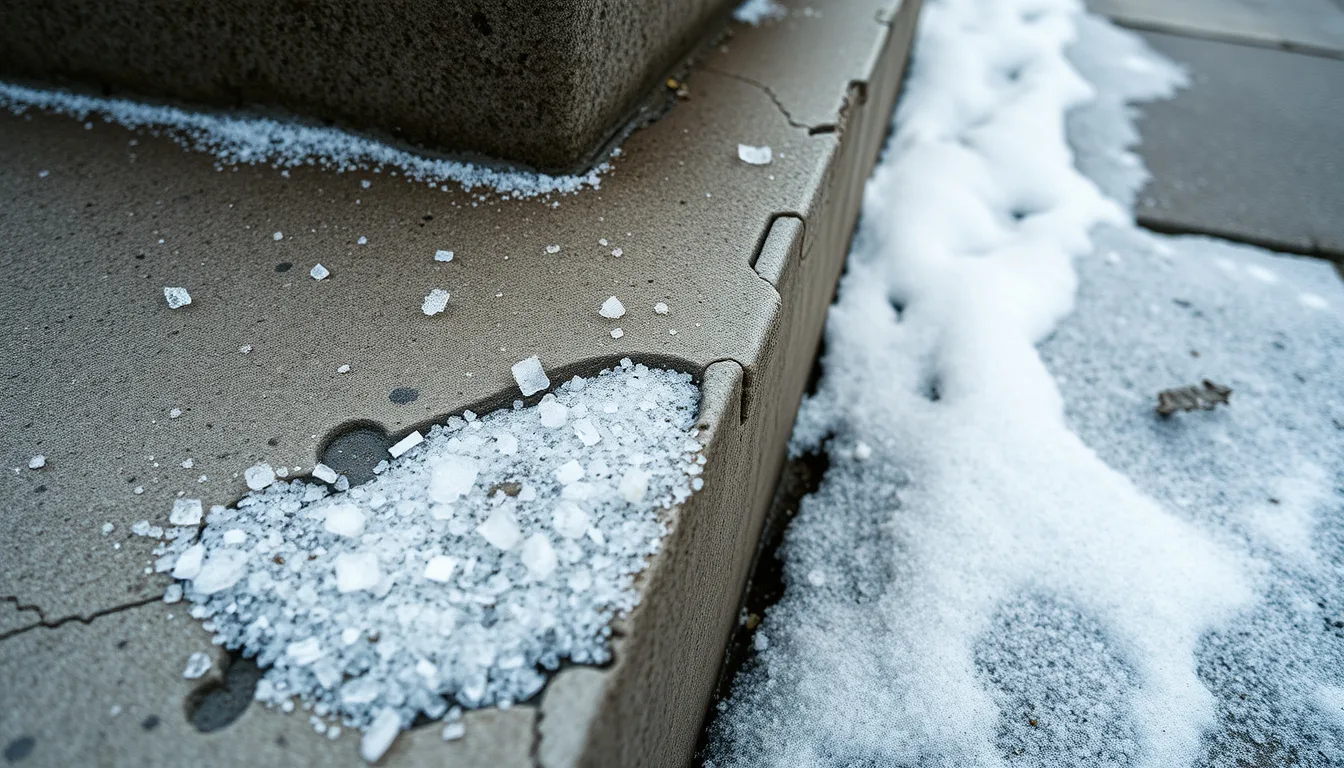
Scaling and spalling are stages of the same damage story, and in Colorado that story usually starts with de-icing chemistry. Colorado DOT and Front Range municipalities rely on magnesium chloride (MgCl₂) and, less often, calcium chloride (CaCl₂) to keep roads, driveways, and walks ice-free — both are standard Colorado winter chemistry, distinct from plain rock salt. Per American Concrete Institute durability testing, calcium chloride has a "negligible" long-term effect on concrete, while magnesium chloride causes measurable, ongoing surface deterioration: in controlled scaling tests, a 4% magnesium chloride solution produced a moderate scaling rating around 3.1, versus roughly 1.6 for an equivalent calcium chloride solution.
The mechanism matters for pricing because it explains why scaling gets worse instead of staying put. Chloride de-icers increase how much water the concrete's pore structure holds, which intensifies freeze-thaw expansion inside the slab — the salt isn't just sitting on the surface, it's changing how much water is available to freeze and fracture the matrix every winter. Left alone, that surface scaling eventually lets chloride ions reach embedded rebar, breaking down the steel's protective oxide layer and starting corrosion. Rusting rebar physically expands, which is what turns a flaking surface into a spall — a chunk of concrete blown off from the inside out. Magnesium chloride is documented as more than twice as corrosive to stainless steel and up to 10 times more corrosive to mild steel than calcium chloride, which is exactly why scaling left unaddressed for a few Colorado winters tends to progress into structural spalling rather than staying cosmetic.
Repair pricing tracks that progression:
- Minor surface patch for scaling that hasn't reached rebar: roughly $20–$50 per square foot
- Patch with rebar cleaning or replacement once corrosion is exposed: roughly $50–$150 per square foot
- Bonded overlay to restore a full damaged surface: roughly $30–$80 per square foot
- Full demolition and recast for severe, widespread spalling: $150–$400+ per square foot
The honest takeaway: scaling repaired early is one of the cheapest fixes on this whole page. Scaling ignored for several winters becomes one of the most expensive.
Resurfacing & Overlay Deep Dive
Resurfacing is the right call when the damage is surface-level and the slab underneath is still structurally sound — the natural next step after crack injection or spalling repair when a driveway or patio has taken years of freeze-thaw cycling and de-icing salt exposure and just needs a uniform, sealed surface back.
Basic single-color resurfacing typically runs $3–$5 per square foot, climbing toward $9 per square foot when extensive surface prep is needed before the new material goes down. Decorative and stamped overlays, popular on Front Range subdivisions replacing worn driveways and patios, run $7–$20 per square foot depending on pattern and finish complexity.
Prep is where the real work happens: cleaning, profiling the existing surface so the new material bonds, applying a bonding agent, and addressing any active cracks or voids before resurfacing over them — skipping that step is the most common reason a resurfacing job fails early. Sealing afterward is what actually protects the investment; a properly sealed, air-entrained overlay resists the next winter's freeze-thaw cycling and salt exposure far better than the original unprotected slab did.
Lifting & Leveling Deep Dive: Mudjacking vs. Polyurethane Foam
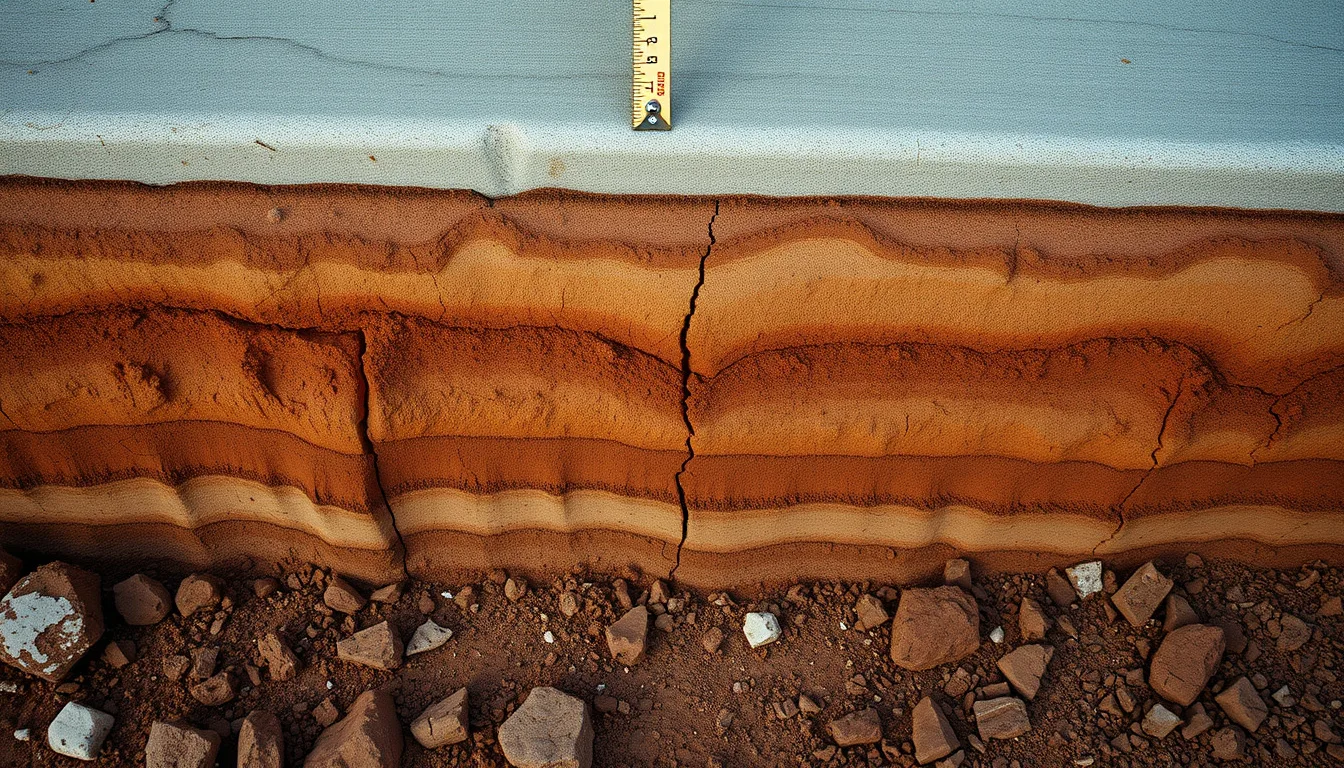
Colorado slabs go uneven for a different reason than in most states. Front Range expansive clay swells when it gets wet and shrinks as it dries, heaving a slab edge up during wet seasons and then leaving a gap underneath as the clay shrinks back down — a cycle documented at roughly 2–6 inches of seasonal ground movement in affected Pierre Shale and bentonite-clay areas. Frost heave from winter freeze-thaw is a secondary cause on top of that. Because the movement is often ongoing rather than a one-time settlement, the lifting method matters more here than in a state where the ground simply compacted once and stopped.
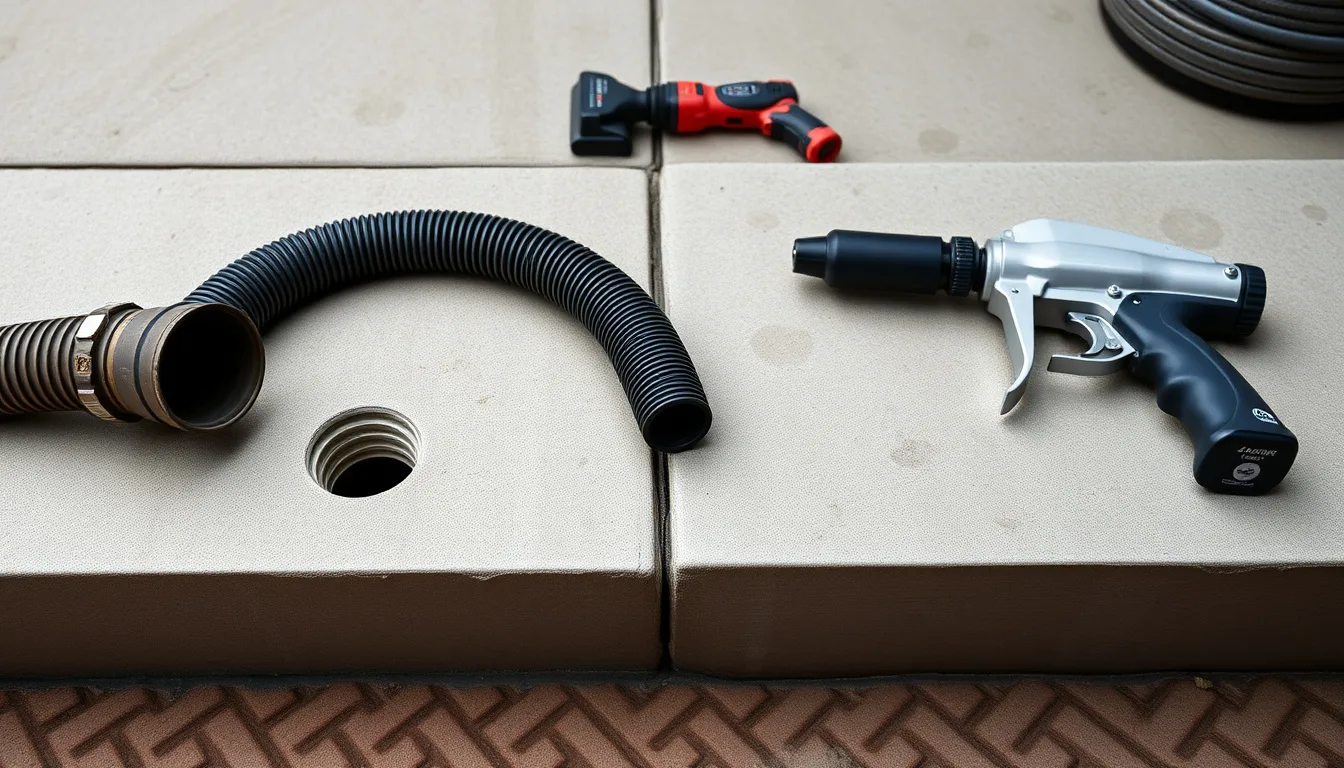
- Mudjacking pumps a heavier cement-and-soil slurry through 1–2 inch holes and needs roughly 1–3 days to cure; it typically runs $3–$6 per square foot and commonly needs redoing within 5–10 years because the material is both heavy and erodible
- Polyurethane foam injection uses expanding lightweight foam through dime-sized (about 5/8 inch) holes, reaches usable strength in around 15 minutes, and typically runs $5–$25 per square foot
Weight is the deciding factor on Colorado's expansive clay: mudjacking slurry runs over 100 pounds per cubic foot, while cured polyurethane foam weighs roughly 2 pounds per cubic foot. Pumping a hundred-plus pounds per cubic foot on top of soil that's already actively swelling and shrinking adds real load to ground that's already moving; foam lifts the slab without reloading the clay underneath it. On stable ground or larger-volume void fills where upfront cost matters more than long-term stability, mudjacking remains a reasonable, lower-cost option — it just isn't the automatic answer on Colorado's clay the way it might be elsewhere.
One honest caveat belongs in every Colorado lifting estimate: on the most active expansive-soil sites, either method may need a follow-up re-level after a severe wet-to-dry swing, because the clay itself keeps cycling. A fair contractor tells you upfront whether your property looks like one of those cases instead of selling a lift as a guaranteed one-time fix.
Cost by Project Type
Colorado pricing shifts by project type as much as by repair method, because access and exposure differ so much surface to surface.
- Driveway: takes the worst of all three damage mechanisms at once — direct de-icing salt exposure, the heaviest vehicular freeze-thaw joint stress, and expansive clay movement under the approach slab — so driveway repairs often combine crack injection with resurfacing or a partial lift
- Sidewalk section: typically the smallest individual repair cost, but sidewalks take the heaviest per-square-foot salt application of any surface on the property, so scaling repair recurs here more than anywhere else
- Patio: sits on backfill against the foundation stem wall, exactly where expansive clay swelling concentrates seasonal movement, often tilting the slab back toward the house and reversing drainage as part of the damage
- Garage floor: an interior slab that still takes exterior-level damage, because de-icing salt and moisture ride in on every vehicle's tires all winter, concentrating chloride exposure indoors in a way that rarely happens in warmer states
- Pool deck: priced case by case, because decks sit over backfilled excavation with unpredictable void volume, and lightweight foam is nearly always the right lifting method over that fill
- Commercial lot: priced by scope and scheduling — commercial sites absorb the heaviest de-icing-salt application of any property type and cover enough surface area that differential settlement across a big pad is common
The Colorado Multiplier: Why National Cost Articles Under-Serve This Market
Most concrete-repair cost guides online are written for a generic national audience, and that generic framing genuinely doesn't hold up here. Colorado's Front Range runs close to 50% more freeze-thaw cycles per year than a city like Chicago. Magnesium chloride and calcium chloride de-icing chemistry at Colorado's usage volume simply isn't a factor most states' cost guides account for at all. And Pierre Shale and bentonite-bearing expansive clay — capable of 2–6 inches of documented seasonal ground movement — is a geology most of the country never has to build a repair estimate around.
Mountain-corridor properties push the multiplier even further. At 5,000–10,000+ feet along the I-70 corridor and in ski-town markets, thinner air changes temperature faster and intense high-altitude sun can thaw snow and ice even when ambient air stays below freezing — driving more aggressive melt-refreeze cycling than the Denver-metro baseline, not less. A generic national cost table has no way to account for any of that, which is exactly why a Colorado-specific repair estimate should always start with an on-site look at which of these forces is actually driving the damage on your property.
Repair vs. Replace, and How to Vet a Colorado Contractor
Repair is almost always the better value. Crack injection, resurfacing, and lifting typically cost a fraction of full tear-out and replacement, and they preserve an existing finish — a stamped pattern, an exposed aggregate texture, a stained color — that a fresh pour can't reproduce. Replacement earns its keep mainly when a slab is broken into multiple large pieces, has severe spalling with widespread corroded rebar exposed throughout, or has heaved and settled so unevenly that leveling can't restore a usable surface.
Whoever you hire to do the work, hold them to a short checklist:
- A real on-site inspection before a firm price — not a phone-quote guess
- A stated cause, not just a repair method — freeze-thaw, de-icing salt, expansive soil, or a combination, explained in plain terms
- Written warranty terms, including what happens if a lifted slab needs a follow-up re-level on active clay
- Drainage addressed alongside the concrete fix — a repair that ignores the water feeding the soil movement underneath it is treating the symptom, not the cause
- An honest no — a contractor who's never told a customer replacement was the better call is selling, not diagnosing
Frequently Asked Questions
How much does concrete repair cost in Colorado?
Most projects run from a few hundred dollars for a single crack or patch up to several thousand for resurfacing or lifting a full driveway or patio. Cost depends on the damage type — crack, scaling, spalling, or unevenness — the repair method, and square footage. A fixed price should come after an on-site inspection, not a phone-quote guess.
What does concrete crack repair or injection cost?
Hairline cracks typically run $5–$8 per linear foot for caulk or sealant, $8–$15 per linear foot for chiseled structural filler, and $15–$25+ per linear foot for epoxy injection with reinforcement on wider structural cracks. A single structural epoxy injection job commonly lands around $250–$500.
What does concrete resurfacing or an overlay cost?
Basic single-color resurfacing typically runs $3–$5 per square foot, extensive-damage resurfacing up to roughly $9 per square foot, and decorative stamped or textured overlays about $7–$20 per square foot depending on finish complexity.
Is repair cheaper than full concrete replacement?
Almost always. Crack injection, resurfacing, and lifting/leveling typically cost a fraction of full tear-out and replacement, and they let you keep an existing finish that a fresh pour can't match. A trustworthy contractor tells you honestly when a slab is too far gone and replacement is the better value.
How do I know if my concrete needs repair or full replacement?
If the slab is a single piece with surface damage — cracks, scaling, unevenness — and sounds solid when tapped, repair almost always makes sense. If it's broken into multiple large pieces, has severe structural spalling exposing corroded rebar throughout, or has settled or heaved so badly that leveling can't restore a usable surface, replacement is usually the honest answer.
What's the difference between mudjacking and polyurethane foam lifting, cost-wise?
Mudjacking is typically the lower up-front cost per square foot, while polyurethane foam costs more per square foot but usually lasts far longer and requires fewer repeat visits on Colorado's expansive clay. We quote both from an on-site inspection so you can compare the total cost over time, not just the initial number.
Can concrete repair be done in a Colorado winter?
Some repairs, like crack injection and interior garage floor work, can be done in cold weather with the right materials, but most exterior resurfacing, overlay, and new-material curing work needs temperatures reliably above freezing. That's also exactly why spring is the busiest season for repairing the winter's freeze-thaw and de-icing-salt damage — booking a spring inspection as soon as the snow clears gets repairs done before the next winter starts the damage cycle again.
Do you offer free estimates and inspections?
Yes, inspections and quotes are free across our Colorado service area. We assess the actual cause of the damage — soil movement, freeze-thaw, salt exposure, or a combination — before recommending a fixed-price repair, rather than quoting blind over the phone.
Get a Fixed Price, Not a Phone Guess
Every driveway, sidewalk, patio, and garage floor in Colorado is taking damage from some combination of freeze-thaw cycling, de-icing salt, and expansive clay soil, and the honest price for fixing it depends on which of those is actually at work under your slab. We inspect for free statewide — Denver, Aurora, Colorado Springs, Fort Collins, Boulder, Pueblo, and everywhere between — and hand you a fixed price after we've actually looked at the damage.
Get in touch through our contact form for a free on-site estimate, or send photos of the slab and we'll tell you straight whether crack repair, resurfacing, lifting, or replacement is the right money to spend.
Ready for a real number?
Free inspections statewide — measured on site, fixed price before any drilling starts.