GARAGE & INTERIOR SLAB REPAIR
Garage & Interior Concrete Slab Repair in Colorado — Fix Salt-Damaged, Cracked, and Uneven Floors
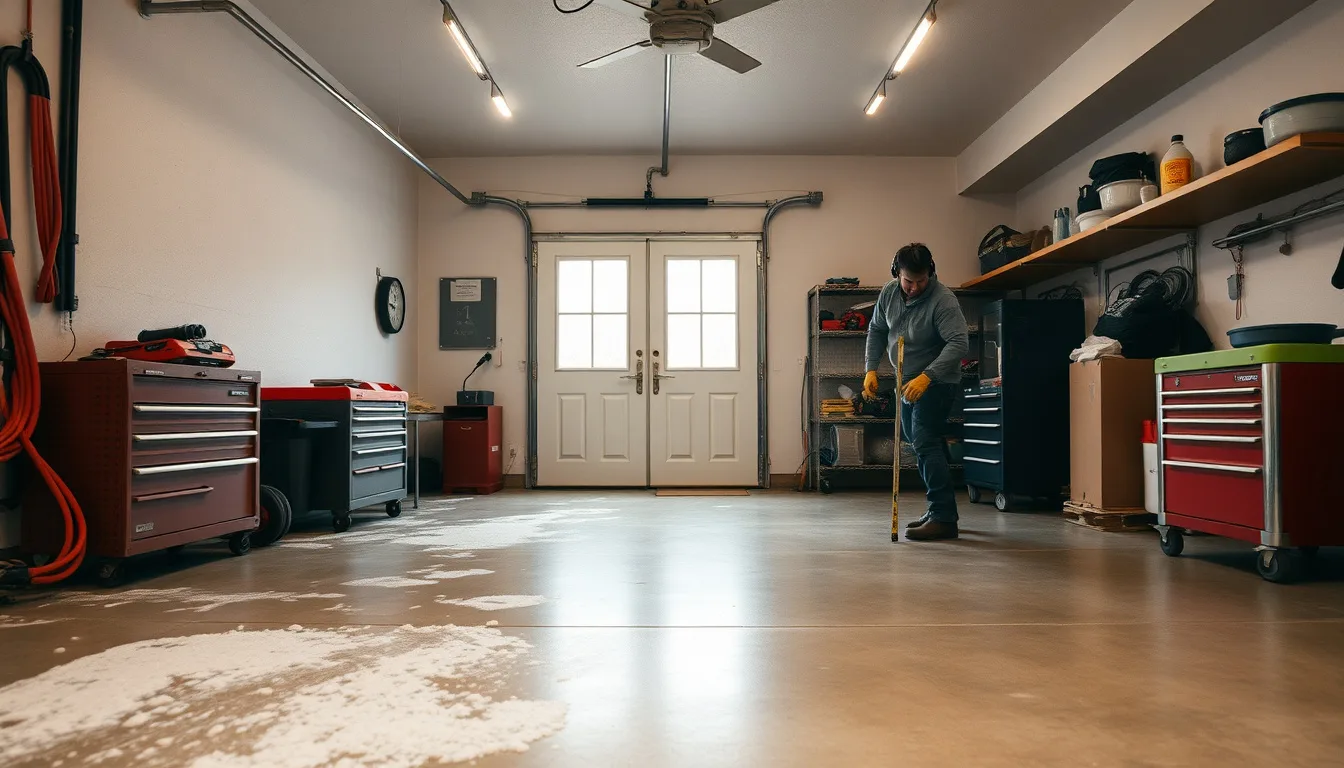
Every winter, Colorado vehicles drive magnesium chloride and calcium chloride straight off the road and onto the garage floor on their tires — turning an indoor slab into one of the most chemically exposed surfaces on the property.
The Garage's Unusual Problem: Winter Damage Indoors
Most concrete damage stories in Colorado are about exposed, outdoor surfaces — but the garage floor is the exception, and it's a genuinely Colorado-specific mechanism. Every time a vehicle pulls in during winter, it carries magnesium chloride and calcium chloride residue from the road straight onto the garage slab, along with melting snow and slush. That process repeats daily for months, concentrating chloride exposure on an interior floor in a way that almost never happens in states without heavy winter road-chemical use.
Unlike a driveway, where rain and snowmelt eventually rinse salt residue away, a garage floor holds that chloride-laden moisture until it evaporates on its own — which means the concentration on an interior slab can actually run higher, pound for pound, than the same square footage of driveway outside. This is one of the least-discussed but most consistent damage patterns we see on Colorado properties.
It also means garage floor damage often surprises homeowners who've never connected the dots — the driveway outside might look fine, but the slab a few feet away, under a roof and technically protected from the weather, is quietly taking the worst chemical exposure on the whole property. We see this most consistently in the two- and three-car footprint directly under each parking spot, where tire tracks concentrate the residue in the same narrow bands winter after winter, which is why the damage often looks like two parallel discolored stripes running the length of the floor rather than a uniform haze.
Scaling and Spalling on an Indoor Slab
The chemistry here works the same way it does outdoors: magnesium chloride increases the water content held inside the concrete's pore structure and is the more damaging of Colorado's two common de-icers, producing a moderate scaling rating (about 3.1 on a standard test scale) versus roughly 1.6 for an equivalent calcium chloride solution. On a garage floor, that shows up as flaking, pitting, and a rough, aggregate-exposed surface concentrated right where vehicles typically park.
Because a garage slab doesn't go through the same direct freeze-thaw cycling as an exposed outdoor surface — it's protected from direct freezing — the scaling here is driven almost entirely by the chloride chemistry itself rather than ice expansion. Left untreated, chloride ions eventually reach any embedded rebar or wire mesh and begin corrosion, which can turn surface scaling into spalling from the inside out even on a floor that's technically indoors year-round.
That distinction matters for diagnosis: a scaling garage floor isn't a sign of a bad pour or a structural problem with the slab itself, it's a chemistry problem building up gradually from the surface down. Catching it at the flaking stage, before it reaches embedded steel, is the difference between a straightforward patch or resurfacing job and a repair that has to address corroded reinforcement underneath.
Cracking and Unevenness at the Apron Transition
The garage door apron — the short transition slab between the driveway and the garage interior — is a different story, and it ties directly into the same expansive-clay problem affecting driveways. That apron sits over backfill at the edge of the garage foundation, subject to the same 2 to 6 inches of seasonal Front Range clay movement documented in affected areas, so it's a common spot for cracking and unevenness where the apron meets both the driveway and the garage floor.
When the apron settles or heaves independently of the interior slab, you get a visible seam or trip step right at the garage entrance — annoying for foot traffic and hard on vehicle suspension and undercarriage clearance over time. We treat the apron transition as its own diagnostic zone, separate from the interior floor's salt-driven scaling, because the two problems have different causes and different fixes.
Repair Options: Patch, Resurface, Coat, or Level
Localized scaling or minor spalling on an interior floor is typically patched directly, restoring a sound, level surface without touching the rest of the slab. Where damage is spread across most of the parking area, a full resurfacing overlay gives a uniform new wear layer over a structurally sound base — often paired with a protective epoxy or polyaspartic coating, which acts as a topcoat barrier that keeps future tracked-in salt and moisture from penetrating the concrete's pore structure the same way again.
At the apron, cracking gets sealed or injected the same way driveway cracks do, while a settled or heaved apron section gets lifted and releveled with polyurethane foam to restore a flush transition. We diagnose the interior floor and the apron separately during inspection, since a property often needs one fix but not the other.
Preventing the Next Winter's Damage: Sealing and Traction Alternatives
Repair alone doesn't stop the chloride exposure from starting over the following winter, so we build prevention into most garage floor jobs rather than treating it as an optional upsell. A penetrating sealer applied after patching or resurfacing meaningfully reduces how much salt-laden moisture the concrete's pore structure absorbs going forward, which slows the scaling cycle even if you can't fully eliminate tracked-in chlorides on a daily-driver vehicle.
On the traction side, homeowners who control what's applied on their own driveway and walkways have a genuine choice: calcium chloride and sand-based traction products are gentler on concrete than magnesium chloride, which is the more corrosive de-icer of the two commonly used in Colorado. Switching what you put down at the top of the driveway is one of the few damage-prevention steps that costs nothing extra and pays off on every surface the salt eventually reaches, garage floor included.
Typical Garage Slab Repair Cost
Minor scaling patches on an interior slab typically run in the range applied to spot patch work generally — small, localized repairs priced by the affected square footage rather than the whole floor. A full resurfacing overlay runs roughly $3 to $5 per square foot for a basic single-color finish, up to about $9 per square foot for more extensive damage, with a protective epoxy or coating topcoat priced separately as an add-on.
Apron crack repair follows standard linear-foot pricing — about $5 to $15 per linear foot depending on crack width and method — and apron lifting is priced by section based on how much void needs filling underneath. As always, we quote a fixed price after seeing the actual slab, since salt-damage severity varies a lot from garage to garage depending on how many winters it's taken. Two-car and three-car garages typically fall toward the lower end of the resurfacing range per square foot simply because the total area is larger and the prep work scales efficiently across the whole floor.
Get a Free Garage & Apron Inspection
If your garage floor is flaking or pitted around where you park, or the apron at the garage door has a visible step or crack, both are worth a look before the damage spreads further into the slab or the rebar underneath. We inspect the interior floor and the apron transition together and give you one fixed-price plan.
Get in touch through our contact form for a free inspection anywhere along the Front Range or statewide. We'll also walk you through protective coating options so the next few winters of tracked-in salt don't undo the repair — and we'll give you an honest read on whether the apron and the interior floor both need attention now, whether one can reasonably wait a season, and what a realistic repair timeline looks like once the ground has thawed enough to work outdoors.
Garage & Interior Slab Repair FAQs
Straight answers before we drill
Vehicles carry magnesium chloride and calcium chloride de-icing residue off the road and onto the garage floor on their tires all winter, and unlike a driveway, that residue doesn't get rinsed away by rain. The concentrated chloride exposure increases pore water content in the concrete and drives surface scaling, with magnesium chloride causing measurably more deterioration than calcium chloride.
Yes — chloride ions from tracked-in de-icing salt eventually penetrate to any embedded rebar or wire mesh and break down the protective layer that normally prevents corrosion. Rusting steel expands and can crack and spall the concrete from the inside, which is how untreated surface scaling on a garage floor progresses into structural damage over several winters.
The garage door apron sits over backfill at the edge of the foundation, which is subject to the same expansive Front Range clay movement — documented at roughly 2 to 6 inches seasonally in affected areas — that causes driveway and patio heaving. It's a common spot for cracking or unevenness independent of the interior floor's salt-scaling problem.
An epoxy or polyaspartic coating applied after repair or resurfacing acts as a barrier that reduces how much salt-laden moisture penetrates the concrete's pore structure going forward. It's not a substitute for repairing existing scaling, but it meaningfully slows the same damage from recurring winter after winter.
We inspect them separately, since salt-driven interior scaling and clay-driven apron cracking have different causes, but we typically quote and schedule both in the same visit if a property needs both addressed. You get one fixed-price plan covering the full entry sequence from driveway to garage interior.
Cracked, sinking, or salt-damaged concrete? Get a fixed price before we drill.
Free inspections statewide. We diagnose freeze-thaw, de-icing salt, and expansive-soil causes before recommending a repair.